Everything You Need to Know About Flow Switches Devices
Updated: May 22, 2025
Flow switches are small but powerful devices used in many industries. They help control how liquids, gases, or steam move through pipes. Flow Switches can turn equipment on or off based on the flow of a substance, making sure everything runs safely and smoothly.
In this blog, we’ll explain what flow switches are, how they work, and where they are used. We’ll also go over the different types of flow switches and why they matter in different industries.

What Are Flow Switches?
Flow switches are devices that open or close an electric circuit depending on how fast a liquid or gas flows through a pipe. They help keep the flow at safe and controlled levels. When the flow is too slow or too fast, the switch can trigger an alarm, start a pump, or shut a machine off.
In other words, flow switches are like safety guards. They make sure the flow is just right—not too high, not too low.
What is Flow?
In industries, “flow” means how liquids, steam, or gases move through pipes. We usually measure this as flow rate, which is how much of a substance moves through a pipe in a certain amount of time. This helps companies manage and control how much material they use, send, or process.
If the flow rate is too low or too high, it can damage equipment or create unsafe conditions. That’s where flow switches come in.
Why Are Flow Switches Important?
Flow switches help keep systems working properly by:
Monitoring the flow of water, air, gas, or steam
Turning machines or pumps on or off
Sending alerts if flow is too low or too high
Preventing damage to pipes and equipment
Saving energy by running equipment only when needed
These devices are very useful in places like water treatment plants, factories, cooling systems, and heating systems.
What Are Water Flow Switches?
Water Flow Switches are a type of flow switch made specifically for water systems. They are used in water pumps, sprinkler systems, cooling systems, and boilers.
For example:
In a sprinkler system, a water flow switch can tell if water is actually moving through the pipes.
In a cooling system, it can stop the machine if water stops flowing, preventing overheating.
Water flow switches are reliable and easy to install, making them very popular in both homes and industries.
How Does a Flow Switch Work?
All flow switches, no matter the type, work using a similar idea. They respond to the flow of a liquid or gas. When the flow reaches a certain level (called the set point), the switch changes its state. This can mean turning something on or off.
There are two main setups:
Normally Open (NO): The circuit is open (off) until flow makes it close (turn on).
Normally Closed (NC): The circuit is closed (on) until flow makes it open (turn off).
Different switches work in different ways, but the goal is always the same: to control flow automatically and safely.
Types of Flow Switches
There are a few types of flow switches. Let’s look at the most common ones.
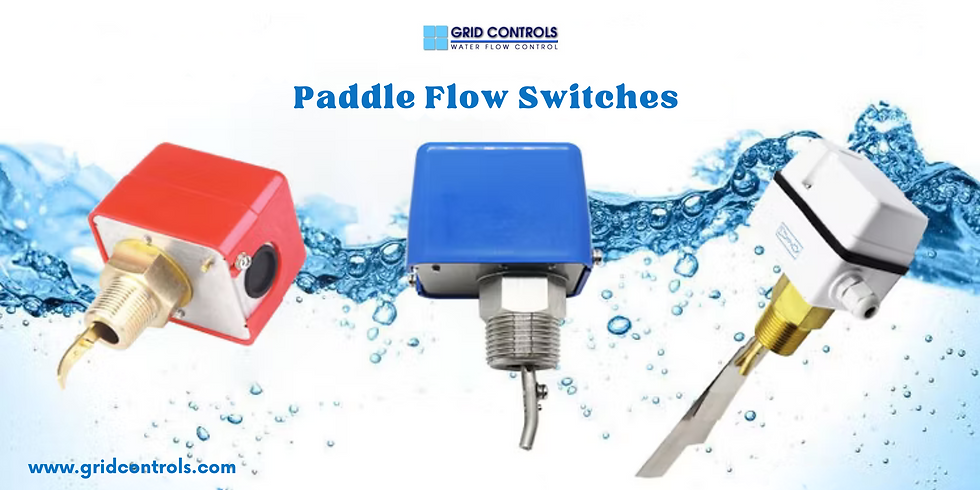
1. Paddle Flow Switches
These use a small paddle inside the pipe. When liquid or gas flows past the paddle, it moves. If the flow gets too strong or too weak, the paddle moves enough to activate the switch.
These are simple and great for basic flow monitoring.
2. Piston or Shuttle Flow Switches
This type uses a small piston (or shuttle) that floats inside the switch. As flow increases or decreases, the piston moves. This movement triggers a magnet to close or open the switch.
These are good for small pipes and clean liquids.

3. Solid-State Flow Switches
Solid-state switches have no moving parts. They use sensors and heat to detect flow. One sensor gets heated, and the other stays at normal temperature. When liquid moves past, it cools the heated sensor. This change tells the switch whether flow is high or low.
These are more advanced and work well in sensitive systems.

Flow Switch vs. Flow Sensor
Some people confuse flow switches with flow sensors. Both monitor flow, but they have different jobs:
Flow Sensor: Only shows flow rate. It can’t control machines or equipment.
Flow Switch: Checks flow and also triggers actions like turning pumps on/off or sending alarms.
So, a flow switch does more than just "watch"—it takes action when needed.
Where Are Flow Switches Used?
Flow switches are used in many places, such as:
HVAC systems (heating, ventilation, air conditioning)
Water treatment plants
Fire protection systems
Oil and gas industries
Chemical processing plants
Cooling systems in large buildings or factories
Irrigation and sprinkler systems
They are very helpful in any system where fluid flow needs to be safe, steady, and automatic.
How to Choose the Right Flow Switch
When picking a flow switch, think about:
What type of liquid or gas you are using (clean, dirty, hot, cold, etc.)
How big your pipes are
What flow range you want to detect
What equipment the switch will control
If you need a simple or high-tech solution
Choosing the right type ensures safety and efficiency in your system.
Benefits of Using Flow Switches
Here’s why many industries use flow switches:
Prevents damage: Stops equipment if flow is too low or high
Saves energy: Only runs machines when needed
Improves safety: Avoids overheating or pressure build-up
Saves money: Reduces breakdowns and repair costs
Increases system life: Protects pumps, pipes, and machines
Whether it’s a small home system or a large factory setup, flow switches offer peace of mind.
Reliable Flow Control with Grid Controls
If you're looking for trusted flow control solutions, Grid Controls offers reliable, high-quality Flow Switches and Water Flow Switches for all kinds of systems. Their products are known for durability, easy installation, and accurate performance.
Whether you need switches for a new project or want to upgrade old equipment, Grid Controls can help. Choose from a range of flow control devices designed for industrial and residential use.
FAQs
1. What is a flow switch used for?
A flow switch is used to control and monitor the movement of liquids or gases in a pipe. It can turn machines on or off based on the flow rate.
2. How does a water flow switch work?
A water flow switch usually has a paddle or piston inside. When water flows past, it moves the paddle or piston, which triggers a switch to start or stop a machine.
3. What is the main difference between a flow switch and a flow sensor?
A flow sensor only measures the flow and shows the data. A flow switch measures flow and also sends a signal to control equipment or trigger alarms.
4. Are flow switches hard to install?
No, most flow switches are easy to install. They are designed to fit into existing pipe systems and come with clear instructions.

Comments